According to Roland Barthes, Semiotics is “the study of the social production of meaning from sign systems”, also known as “the analysis of anything that can stand for something else” (Griffin 324). Every sign in his eyes was a combination of a signifier (the physical form of the sign as we perceive it through our senses, also known as an image), and the signified (the meaning we associate with the sign (Griffin 325). According to Saussure, “semiotics tells us that we are always sending messages to other people and they are sending messages to us. But interpreting what these signs mean is a complicated matter” (Berger 7).
As seen in this video, there are many different interpretations and meanings behind roses and the different colors that they hold. Seeing as Valentine’s Day was somewhat recently, I thought that this example was fitting, because of how taxing it can be sometimes for men and women to interpret the meaning behind the different colored roses and flowers that they receive from others, whether it is on Valentine’s Day or not. I know that when I was in high school, around Valentine’s Day there was always a rose sale where one could send different colored roses to friends and loved ones, white, pink, or red, and it was always a challenge to decipher what it meant if you received one from a boy. I recall that if you received a white one it meant friendship, a pink one it meant I like you, and a red one it meant I love you, and yet it could not always 100% of the time be assumed that way.
I think if Barthes theory shows us anything, it is that different signs can really stand for a number of different things, and I think that is exactly what the above video fails to show. I know that in watching the video, I thought beforehand that a number of those different colored roses stood for different things then what the video said, but I think that is what the video does not portray. For example, I always believed that the yellow rose stood more for mourning and funerals and such, seeing as you tend to see them displayed so much in death situations, but the video instead said that the white rose stood for that. I think it is an interesting concept to think about, and I’d be curious to see what all of you think on the topic. What do you all think the different colors stand for? Do you think that they all have multiple meanings and can stand for different things, or can be interchangeable?
Monday, March 2, 2009

Monday, February 23, 2009
Media Ecology: Back in the Tribal Age
McLuhan's analysis of history places us in the electronic/digital age. He says that we are starting to revert to our original dominant sensor, which was hearing. I think that we are more in the digital age and are reverting to the "touch" sensor. People aren't necessarily talking on the phone, they are sending text messages, posting on line and using Facebook and Myspace. This is definitely the age of touch. There are some ways that hearing is still dominant, for one, listening and speaking work much better during team play on XBox live. Things that require speed are much more efficient using sound. The following clip is a history of how the cell phone is shaped. but the reason i picked this clip was to show some of the statistics is has on it.
This clip shows the transformation of the cell phone through the electronic age starting in 1985 and working its way up. This supports his claim that the hearing sense is returning and making us tribal again. However, there is this thing called text messaging. Around 1:59 in the clip one of the blurbs said "17 Billion text messages were sent worldwide in 2000. 250 billion in 2001, 500 billion in 2004, and 1.9 trillion in 2007... I think with the amount of texts flying around that we are not in the tribal age again, but we hit it briefly and are now in a completely different age using touch as our main sensor. We do it this with facebook and myspace websites, this enables us to stay in contact with people much easier. This new age is all about the words on the page.
This clip shows the transformation of the cell phone through the electronic age starting in 1985 and working its way up. This supports his claim that the hearing sense is returning and making us tribal again. However, there is this thing called text messaging. Around 1:59 in the clip one of the blurbs said "17 Billion text messages were sent worldwide in 2000. 250 billion in 2001, 500 billion in 2004, and 1.9 trillion in 2007... I think with the amount of texts flying around that we are not in the tribal age again, but we hit it briefly and are now in a completely different age using touch as our main sensor. We do it this with facebook and myspace websites, this enables us to stay in contact with people much easier. This new age is all about the words on the page.
Monday, February 16, 2009
Bret's Agenda-Setting Theory Analysis
In Maxwell McCombs & Donald Shaw’s Agenda-Setting Theory, their initial claim is that the news media does not tell the public what to think, but tells them what to think about. The mass media has the ability to transfer the importance of items on their news agendas to the public agenda. According to McCombs & Shaw, “we judge as important, what the media judge as important” (Griffin, 359). They know that people have their own minds and ideas of what each thinks are important. On the other hand, the people that are the most influenced by the media agenda are those with a high need for orientation or a high “index of curiosity.” McCombs & Shaw later concluded that the media does not only tell the public what to think about, but they also may tell the public how to think about it, what to think about it, and possibly what to do about it (Griffin, 366).
This is a CNN news clip about Michael Phelps being caught in a photograph, smoking marijuana out of a bong. This portrays the Agenda-Setting Theory, because it is a clip of news media that is telling the public that this is important. This clip extends to almost nine-minutes in length, so CNN must find it to be an important news topic. The news reporter starts off this segment mentioning that Michael Phelps is a “role model” and is asking for people’s opinion on what they think about his actions. Not only is the reporter helping to show the public how they should view Phelps’ actions, but he is asking other people for their opinions as well. This will help mold those watchers, which have a high “index of curiosity,” as to what they should think about the issue.
I agree with McCombs & Shaw in that the news media does shape what the public finds to be important. All news media outlets picked up the Michael Phelps smoking marijuana story and within a week, it seemed that a large amount of people were talking about it.
--Bret Schlein
This is a CNN news clip about Michael Phelps being caught in a photograph, smoking marijuana out of a bong. This portrays the Agenda-Setting Theory, because it is a clip of news media that is telling the public that this is important. This clip extends to almost nine-minutes in length, so CNN must find it to be an important news topic. The news reporter starts off this segment mentioning that Michael Phelps is a “role model” and is asking for people’s opinion on what they think about his actions. Not only is the reporter helping to show the public how they should view Phelps’ actions, but he is asking other people for their opinions as well. This will help mold those watchers, which have a high “index of curiosity,” as to what they should think about the issue.
I agree with McCombs & Shaw in that the news media does shape what the public finds to be important. All news media outlets picked up the Michael Phelps smoking marijuana story and within a week, it seemed that a large amount of people were talking about it.
--Bret Schlein
Agenda-Setting Theory.
The Agenda-Setting Theory was established by Maxwell McCombs and Donald Shaw. They believed that the, '"mass media [has] the ability to transfer the salience of items on their news agendas to make them public agendas"' (Griffin 359). In other words they believed that the media had the ability to form the publics opinion but that's not what their intention was. According to McCombs and Shaw, the media's agenda is to tell the public what they should be thinking about opposed to what they should be thinking and the ideas and opinions they should inevitably be conceiving.
The chapter on agenda-setting by Griffin goes into more detail about all aspects of the theory and how it's been tested and countered. One part of the chapter that most grabbed attention was not a quote but an actual section title within the chapter entitled, "Who Sets The Agenda For The Agenda Setters?" And within that section Griffin talks about an experiment that three gentleman by the names of Iyengar, Peters, and Kinder attempted to conduct that increased awareness to the global issues of economic inflation, national defense, and environmental pollution. The three men found that they were limited to choose what stories to do their experiment on from only stories that had been aired. Only three quarters of the stories that come across a news desk are actually aired on television. There is a lot of blame and fingerprinting to who is actually to blame but what I think it all boils down to is that we all want to make ourselves look good. I don't believe there is a conspiracy that all the news editors in the universe prevent all news from circulating and I don't agree that the subjects themselves that are being reported on all for the media to make themselves look good. Everyone is to blame because even if we don't make ourselves look good at one point in time you're either going to help someone else look good or buy into whatever agenda-setting techniques they've used to help form your opinions on what they want you to think about. Do you agree?
I'll leave you with this clip from an episode of West Wing. The entire time I read the section on agenda-setting I couldn't get this episode out of my head and I was so glad I was able to find a great clip on it.
In the following clip the White House's Press Secretary C.J. Cregg acts as the agenda setter for the media who acts as the agenda setter for the rest of the government and the American people.
The chapter on agenda-setting by Griffin goes into more detail about all aspects of the theory and how it's been tested and countered. One part of the chapter that most grabbed attention was not a quote but an actual section title within the chapter entitled, "Who Sets The Agenda For The Agenda Setters?" And within that section Griffin talks about an experiment that three gentleman by the names of Iyengar, Peters, and Kinder attempted to conduct that increased awareness to the global issues of economic inflation, national defense, and environmental pollution. The three men found that they were limited to choose what stories to do their experiment on from only stories that had been aired. Only three quarters of the stories that come across a news desk are actually aired on television. There is a lot of blame and fingerprinting to who is actually to blame but what I think it all boils down to is that we all want to make ourselves look good. I don't believe there is a conspiracy that all the news editors in the universe prevent all news from circulating and I don't agree that the subjects themselves that are being reported on all for the media to make themselves look good. Everyone is to blame because even if we don't make ourselves look good at one point in time you're either going to help someone else look good or buy into whatever agenda-setting techniques they've used to help form your opinions on what they want you to think about. Do you agree?
I'll leave you with this clip from an episode of West Wing. The entire time I read the section on agenda-setting I couldn't get this episode out of my head and I was so glad I was able to find a great clip on it.
In the following clip the White House's Press Secretary C.J. Cregg acts as the agenda setter for the media who acts as the agenda setter for the rest of the government and the American people.
Monday, February 9, 2009
Cultivation Theory- Television Grows Fearful Thoughts
In the chapter of Cultivation theory Griffin writes about Gerbner's survey to discover the cultivation differential. Gerbner targeted four attitudes in this survey: Chances of involvement with violence, Fear of walking alone at night, Perceived activity of police, and the general mistrust of people. What Gerbner did was take two groups, the light and heavy viewers and asked them about each category. What he got was the heavy viewers believing that they are more likely to be a victim of violence, they fear that 1 in 10 of them will be of risk of violence on any given day. Light viewers believed that in was more like 1 in 100. Crime statistics actually indicate that 1 out of 10,000 is more likely. Watching shows like CSI and 24 people fear walking alone at night, because the shows make the person believe that something will happen. The other perception is that people who are heavy TV viewers think that police are always out in force patrolling the streets. This is not the case. I can say that this is also not true because my dad is an officer and he often tells me about the lack of police on the streets. The final attitude is that most heavy TV viewers have a general mistrust of people, because of all of the backstabbing going on in most shows that are on TV these days.
In this video from 24, it shows jack and his team entering a suspected terrorist hideout where they end up killing all of the people inside.
This depicts a very violent situation where people are dying and to the heavy viewer they may take this show as being real. they might think that this is actually what happens on a regular basis with our counter terrorism and police forces. This video goes along with the perceived activity of Police. Police normally do not engage in all out firefights with suspects.
This is the problem with people watching to much TV, they gain perceptions of different things which are not substantiated in any way but through TV shows. I do not watch much TV, I probably see about one hour per week for a snowboarding show I watch. To me I can understand why people would have fearful thoughts from TV. If they do not have any other experience than whats on TV, then I think that Gerbner's survey was effective.
In this video from 24, it shows jack and his team entering a suspected terrorist hideout where they end up killing all of the people inside.
This depicts a very violent situation where people are dying and to the heavy viewer they may take this show as being real. they might think that this is actually what happens on a regular basis with our counter terrorism and police forces. This video goes along with the perceived activity of Police. Police normally do not engage in all out firefights with suspects.
This is the problem with people watching to much TV, they gain perceptions of different things which are not substantiated in any way but through TV shows. I do not watch much TV, I probably see about one hour per week for a snowboarding show I watch. To me I can understand why people would have fearful thoughts from TV. If they do not have any other experience than whats on TV, then I think that Gerbner's survey was effective.
Sunday, February 8, 2009
The Cultivation Theory- Violence on TV
According to Griffin, the violence that exists in the world around us so many times is connected to what one views on television. Dramatic violence, as Griffin refers to it, is “ the overt expression of physical force (with or without a weapon, against self or others) compelling action against one’s will on pain of being hurt and/or killed or threatened to be so victimized as part of the plot” (Griffin 350). In terms of this theory, Griffin believes that so many of the primetime shows that we watch on a regular basis contain violence, with such examples as Lost or CSI, and that these dramas include an average of five traumatic incidents per hour (Griffin 350-51). By the time one graduates from high school, they on average have observed about 13,000 violent deaths on television (Griffin 351).
In regards to what groups are most displayed in these violent acts, whites account for around 50 percent of the center of these violent acts, and women are outnumbered to men in a 3 to 1 ratio (Griffin 351). In one of my favorite primetime dramas, One Tree Hill, I witness at least five traumatic incidents per hour episode, and many times it is the abuse, or even worse, the death of a character. With such messages being displayed in what is supposed to be a show meant for teenage-aged individuals, it is no wonder such immense amount of violence occurs in our society.
I agree with Griffin that much of the time these violent acts are experienced by female members of the casts of these shows. In the video clip that I chose, one of the main characters, Brooke Davis, is recalling her prior attack by a male individual who previously attacked her, and is now fighting back against him in defense of herself and her foster daughter Sam. Although the message of the episode is in some ways a hopeful one, teaching young women the act of self-defense and standing up for oneself, at the same time the violent acts are still being displayed. So I have to ask, is it better to display these types of acts with a hopeful and inspiring message attached to them, or to not display such acts at all? I think many times these shows and networks feel that their ratings would go down or be non-existent without such action and suspense, but for the sake of preventing such acts from occurring in real life, I almost feel myself that it would be better to approach the issues from a different, less violent, angle.
Monday, February 2, 2009
Aristotle's Rhetoric
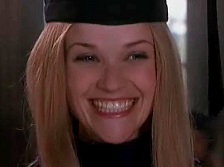
Even though Aristotle lived in the time of Ancient Greece and over 2,300 years ago his ideas and theories on rhetoric are still relevant today. Aristotle developed a theory that the "available means of persuasion are based on three kinds of proof: logical (known as logos), ethical (known as ethos), and emotional (known as pathos)" (Griffin pg. 280).
This is an audio clip from the movie Legally Blonde proving that even with a small speech that over 2,000 years later Aristotle's views on rhetoric are still prevalent.

Logos is proof of a logical nature that comes from the argument found within a speech and is persuasion based on deductible reasoning. Elle Woods, in the movie Legally Blonde, uses logos in her Harvard graduation speech by first quoting Aristotle and then proving him incorrect by offering her logic from her experience at Harvard.
Ethos is "ethical proof, which comes from the speaker's intelligence, character, and goodwill toward the audience, as these personal characteristics are revealed through the message" (Griffin pg. 283). In the Legally Blonde speech Elle uses ethos because as Professor Stormwell mentions at the beginning of the clip Elle is the graduation class' elected speaker and the professor also mentions that Elle has been invited to be a part of one of Boston's most renowned law firms. The audience of Elle's speech are her peers and it's made obvious that they see the characteristics in Elle that are the same characteristics that build ethos because they choose her to speak and if anyone was weary of her qualifications their doubts should be dismissed because of her job offer.
Pathos is, "emotional proof, which comes from the feelings that speech draw out of those who hear it." If you've seen the entirety of the movie, Legally Blonde, you know that at the beginning when Elle first went to Harvard she was not widely accepted by her classmates based on first impressions. In her speech to her peers she offers advice to them: that first impressions are not always correct, to always have faith in people, and always have faith in yourself. What you cannot hear in the audio clip but can visually see in the movie are the emotions from her classmates that show how far they've come from from first meeting Elle and a deep appreciation for what she has just taught them and the conclusion of her speech is met with a roaring applause.
Subscribe to:
Posts (Atom)